
With hundreds of crypto exchanges in 2026, choosing the right one can be overwhelming. Below are three of our top picks for Australian users, plus more options to consider.

- Low fees: 0.1% spot, and 0.02% maker / 0.055% taker on derivatives
- 432 coins and 588 trading pairs, with deep liquidity on major markets
- Fast execution, 24/7 live chat and a demo mode for testing strategies

- Australian-owned, founded 2013, AUSTRAC-registered since May 2018
- 480+ cryptocurrencies, and free AUD deposits and withdrawals via PayID
- 0.1% on market orders, though instant buy costs 1%
- A$20 of free Bitcoin through our link, double the standard rate, once you verify your ID and make your first deposit
- ISO 27001:2022 certified and AUSTRAC-registered, with free AUD deposits and withdrawals
- Demo mode with A$10,000 in virtual money, plus Learn & Earn courses
- 417 coins, with fees from 0.6% falling to 0.1% at high volume
- A$20 of free Bitcoin through our link, double the standard rate, once you verify your ID
Best crypto exchanges in Australia: compared
Every platform below is covered in full further down the page. Fees, coin counts and regulatory status were checked against primary sources in July 2026.
| MPF Score | Exchange | Trading fees | Coins | AUD in & out | Australian status | |
|---|---|---|---|---|---|---|
| 95/100 | Best for active traders |
0.1% spot 0.02% / 0.055% derivatives |
432 | Card & P2P on-ramps only | Not AUSTRAC-registered | Visit |
| 97/100 | Best all-round Australian |
0.1% market order 1% instant buy |
480+ | Yes, free | AUSTRAC since 2018 | Visit |
| 96/100 | Best for learning |
0.6% to 0.1% Plus spread |
417 | Yes, free | AUSTRAC-registered | Visit |
| 92/100 |  Low fees, simple Low fees, simple |
0.5% to 0.1% By 30-day volume |
400+ | Yes, free | AUSTRAC-registered | Visit |
| 90/100 |  Lowest headline fees Lowest headline fees |
0% maker 0.05% taker (spot) |
1,735 | No withdrawals | Not AUSTRAC-registered | Visit |
| 94/100 |  Deep liquidity Deep liquidity |
0.1% spot 25% off with BNB |
449 | Yes, PayID | AUSTRAC, no AFSL | Visit |
| 91/100 |  Wide altcoin range Wide altcoin range |
0.1% spot 0.08% with KCS |
876 | Yes, PayID | AUSTRAC since 2025 | Visit |
| 88/100 |  The only ASIC-licensed one The only ASIC-licensed one |
1% buy and sell Plus FX conversion |
100 | Yes, free | AFSL 491139 + AUSTRAC | Visit |
| eToro AUS Capital Limited AFSL 491139. eToro is a multi-asset investment platform. The value of your investments may go up or down. Your capital is at risk. See PDS and TMD. T&Cs apply. | ||||||
| 89/100 |  Crypto card Crypto card |
1% in-app 0.1% or less on CoinJar Exchange |
60+ | Yes, free | AUSTRAC-registered | Visit |
| 90/100 |  Larger balances and SMSFs Larger balances and SMSFs |
0.5% down to 0.02% By 30-day volume |
40+ | Yes, free EFT | AUSTRAC-registered | Visit |
| 86/100 |  Beginners Beginners |
1% brokerage | 40+ | Yes, free | AUSTRAC (same as #10) | Visit |
How we rank these exchanges
Every platform on this page was checked against the exchange’s own published fee schedule, funding pages and security disclosures, plus the AUSTRAC and ASIC registers, in July 2026. Where a platform’s marketing and its own documentation disagree, we use the documentation.
We weight these five things, in no particular order:
- Total cost. Not just the headline trading fee. The spread, the deposit method and the instant-buy premium usually cost more than the fee itself, and we say so where they do.
- Australian dollars in and out. Whether you can deposit and withdraw AUD straight through your own bank account, free, without paying a third-party service to convert it for you.
- Regulatory standing in Australia. Whether the platform is on the AUSTRAC register, and whether it holds an ASIC licence. These are different things, and we do not conflate them.
- Security posture. Certifications, custody arrangements, audit history, and any breach on the record.
- The product itself. Coin range, liquidity, execution, support and tooling.
How we get paid. We earn a commission when you sign up through our links, and that is disclosed at the top of this page. It does not change the fees, the coin counts or the regulatory facts below, all of which come from primary sources you can check yourself.
Bybit, MEXC and KuCoin advertise leverage of 100x and higher. ASIC caps leverage on crypto derivatives at 2:1 for Australian retail clients, and none of these three holds an Australian financial services licence. ASIC has publicly warned Australians about a comparable offshore platform offering high-leverage crypto futures, noting that it “is not permitted to promote or encourage Australian investors to invest in its financial products.”
Using an offshore platform is not an offence for you as an individual, but it does mean you have no access to AFCA, no client-money protections, no internal dispute resolution rights and no negative balance protection if the platform freezes withdrawals, liquidates you unfairly or fails. Leveraged positions can lose more than your deposit. Only you can decide whether that trade-off is worth it.
What is the best crypto exchange in Australia?
It depends on what you are optimising for, and the honest answer is that no single platform wins on every axis.
If you are trading actively, Bybit is the strongest venue on this page: 0.1% spot fees, 0.02% / 0.055% on derivatives, deep liquidity and fast execution. You pay for that with the Australian side of the equation, because you cannot deposit or withdraw Australian dollars through your bank, and it is not AUSTRAC-registered.
If you want to buy and hold in Australian dollars, an AUSTRAC-registered local platform is the better fit. CoinSpot has the widest coin range of the Australian exchanges and free PayID deposits, as long as you use market orders at 0.1% rather than instant buy at 1%. Digital Surge is cheaper on paper. Swyftx is the easiest place to learn.
And if Australian licensing is your first priority, eToro is the only platform on this page holding an ASIC financial services licence as well as AUSTRAC registration. Its 1% fee is high and its 100-coin range is narrow, so you are paying for that protection.
- 0.1% spot fees, 0.02% / 0.055% on derivatives
- 432 coins, with the deepest liquidity and fastest execution here
- Offshore: no AUD bank transfers, not AUSTRAC-registered

- Australian-owned, AUSTRAC-registered since May 2018
- 480+ coins, the widest range of the Australian platforms
- 0.1% on market orders, free AUD deposits and withdrawals
- Demo mode and Learn & Earn courses for beginners
- ISO 27001:2022 certified, free AUD deposits and withdrawals
- 417 coins, fees from 0.6%, but check the spread
- The only platform here with an ASIC licence (AFSL 491139)
- Crypto, shares and commodities in one account, plus Copy Trading
- 1% on every buy and sell, and only 100 coins
eToro AUS Capital Limited AFSL 491139. eToro is a multi-asset investment platform. The value of your investments may go up or down. Your capital is at risk. See PDS and TMD. T&Cs apply.
The 11 best Australian cryptocurrency exchanges of 2026
Bybit – Best for active traders
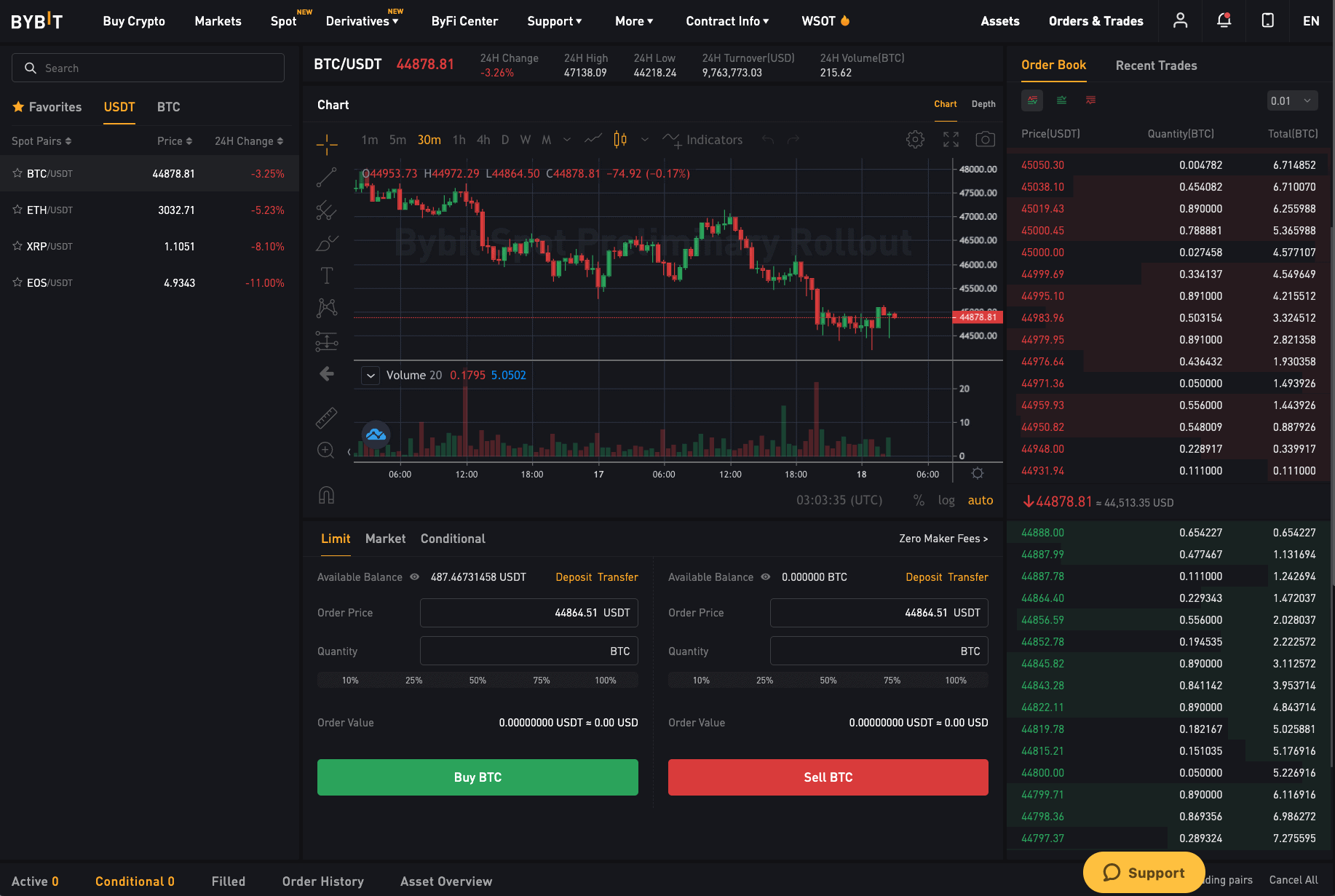
The cheapest, deepest venue on this page if you trade often. Also the one with the least Australian protection: no AUD deposits or withdrawals through your bank, no AUSTRAC registration, no ASIC licence.
- 0.1% spot fees, 0.02% / 0.055% on derivatives
- 432 coins across 588 trading pairs
- Deep liquidity and fast execution
- Demo mode and 24/7 live chat
- No AUD deposits or withdrawals to an Australian bank
- Not AUSTRAC-registered, no ASIC licence
- No AFCA recourse if something goes wrong
- Crypto only, no shares or other assets
If you trade regularly, and particularly if you use futures or leverage, Bybit is the strongest platform here. Founded in 2018, it has the liquidity and execution speed that active traders need, and the fees are the lowest of any full-featured exchange on this list: 0.1% for spot, and 0.02% maker / 0.055% taker on derivatives. Its demo trading mode is genuinely useful for testing a strategy before you risk real money, and support answers quickly.
The catch is everything on the Australian side. You cannot deposit or withdraw Australian dollars through your bank. You can buy crypto with a card, PayID or Apple Pay through third-party on-ramps, which cost more, but cashing out to your bank account means moving crypto to an Australian exchange first. Bybit is not on the AUSTRAC register and holds no ASIC licence, so if the platform freezes your account or fails, you have no Australian dispute resolution to fall back on.
Bybit advertises leverage of up to 100x. ASIC limits Australian retail clients to 2:1 on crypto derivatives, and Bybit is not licensed here, so that leverage is available only because the platform sits offshore. It can lose you more than you deposited. Treat it accordingly.
CoinSpot – Best all-round Australian exchange
A$20 free BTC
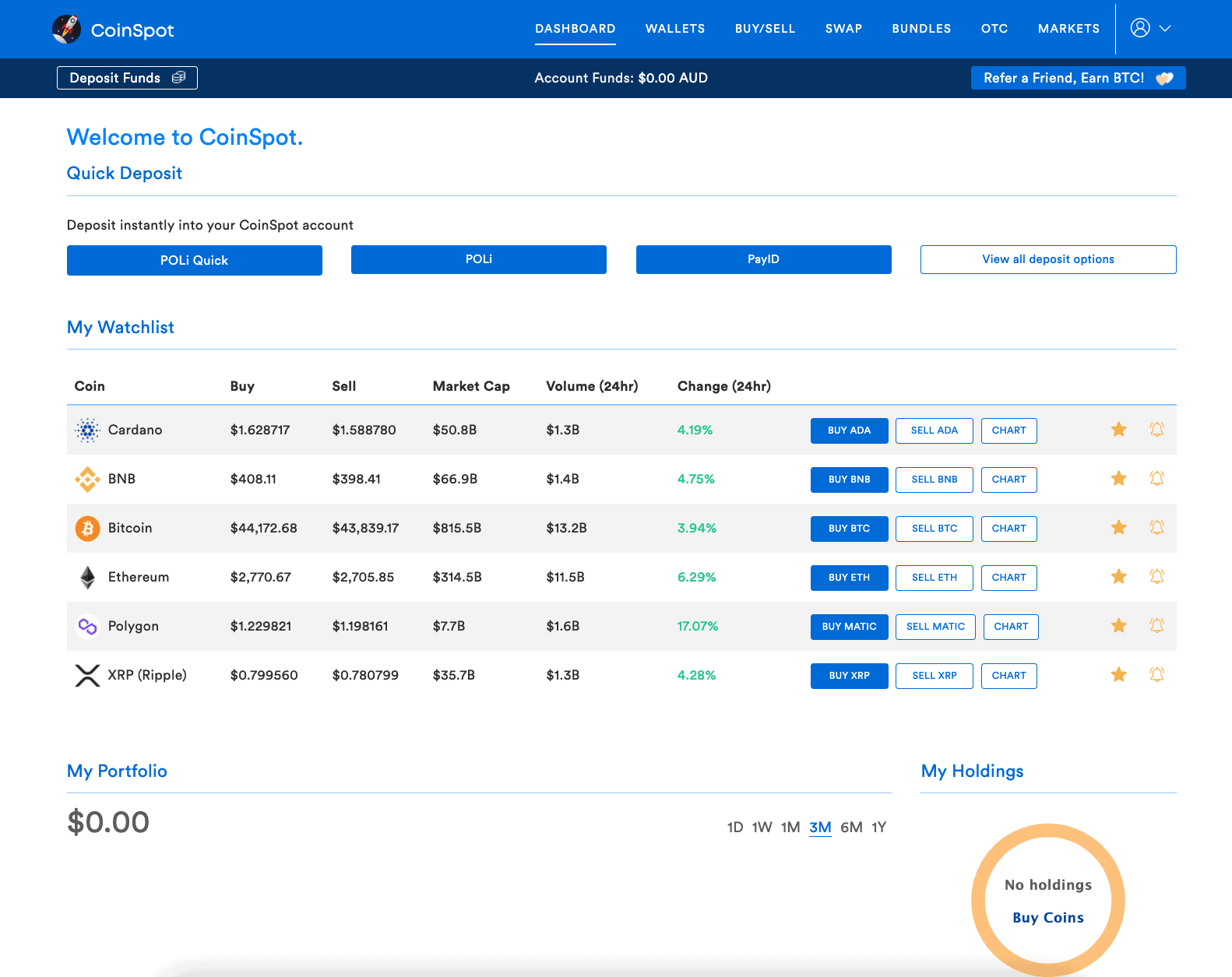
The most complete Australian option: 480+ coins, free AUD deposits and withdrawals, AUSTRAC-registered since 2018, and 0.1% fees if you use market orders instead of instant buy.
- 480+ coins, the widest Australian range
- 0.1% on market orders
- Free AUD deposits and withdrawals via PayID
- ISO 27001 certified, external audits FY21 to FY23
- Instant buy costs 1%, ten times the market order fee
- Staking has been suspended since September 2023
- Hot wallet exploit in November 2023, never publicly addressed
- No margin or futures markets
If you want one Australian account that does most things, CoinSpot is the pick. It has been running since 2013, it was AUSTRAC-registered in May 2018 as soon as the regime began, and it carries more coins than any other Australian platform on this page. Deposits and withdrawals in Australian dollars are free through PayID or bank transfer, and the interface is genuinely easy for a first-timer.
The fee trap is worth understanding. CoinSpot's instant buy costs 1%. The same trade placed as a market order on the exchange screen costs 0.1%. That is a ten-fold difference for a slightly less convenient screen, and it is the single biggest saving available to a new CoinSpot user.
On security, CoinSpot was the first Australian exchange to earn ISO 27001 certification and the first to complete an external statutory financial audit, receiving an unqualified opinion for FY21, FY22 and FY23 confirming it holds customer assets 1:1. It also runs a HackerOne bug bounty. Set against that: in November 2023, blockchain analysts identified roughly US$2.4 million leaving a CoinSpot hot wallet in what looked like a private key compromise. CoinSpot has never publicly commented, and no customer losses were reported. It is the only exchange on this page with a confirmed incident on the record, and you should factor that in.
Two things to know before you sign up: staking, which CoinSpot used to offer, has been suspended since 1 September 2023, and the AFSL CoinSpot holds covers the CoinSpot Mastercard, not the exchange itself.
Signing up through our link gets you A$20 of free Bitcoin, double CoinSpot’s standard referral bonus, after you verify your ID and make your first deposit.
Swyftx – Best for learning the ropes
A$20 free BTC
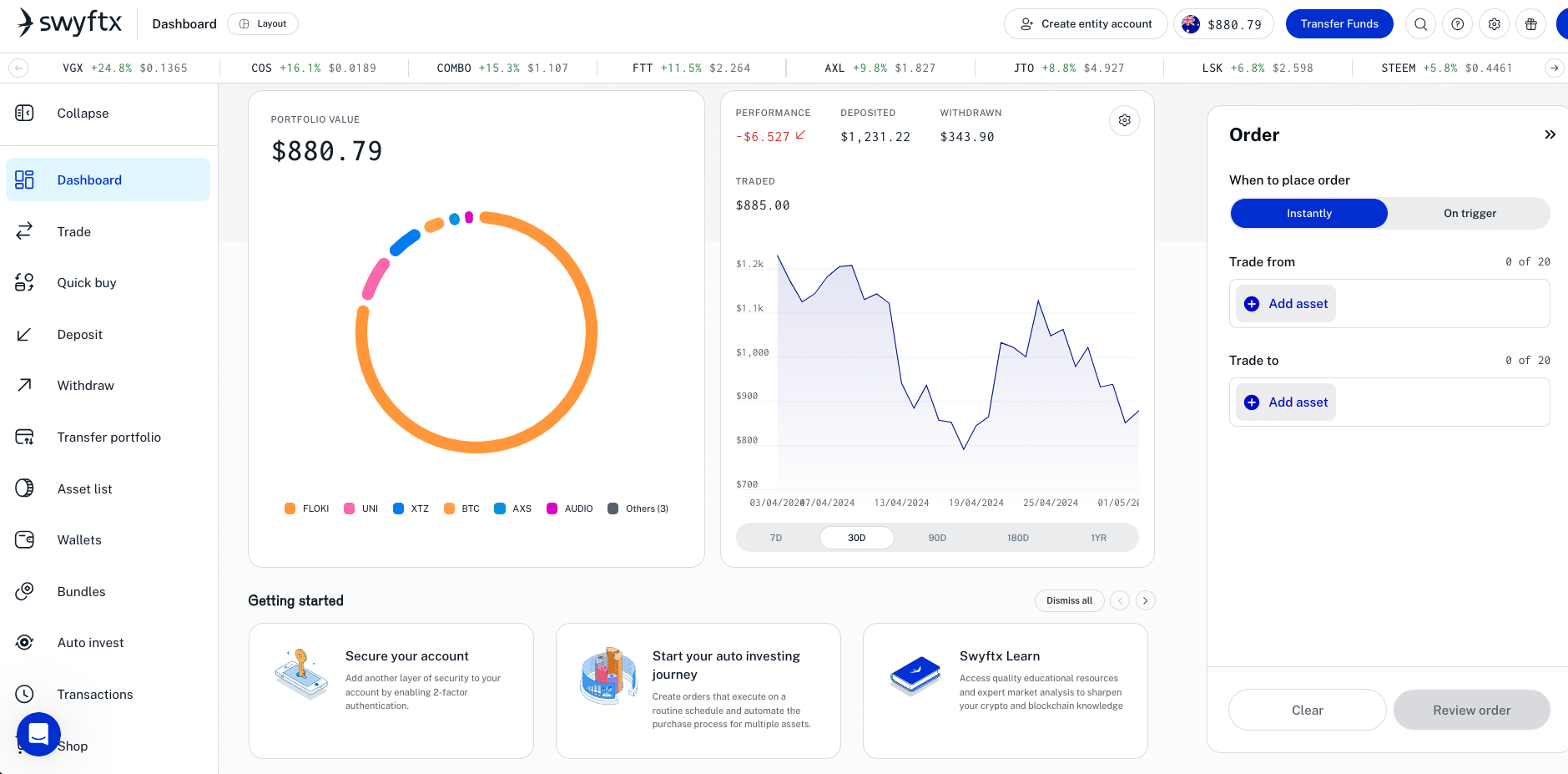
The best place in Australia to learn, with a demo mode and free courses. Just watch the spread, which costs more than the headline fee.
- Demo mode with A$10,000 of virtual money
- Learn & Earn courses pay you in crypto
- ISO 27001:2022 certified, 1:1 reserves, no lending of customer assets
- Free AUD deposits and withdrawals
- The spread is charged on top of the fee and is often larger
- No staking since Earn closed in January 2023
- Retail margin and futures are not available
- Australia and New Zealand only
Swyftx is the platform I would put a complete beginner on. The demo mode gives you A$10,000 of virtual money at real market prices, so you can make your first mistakes for free, and the Learn & Earn courses pay small amounts of crypto for finishing short lessons. It is AUSTRAC-registered, ISO 27001:2022 certified, and it states that it holds reserves 1:1 and does not lend out customer assets.
Understand the spread before you trade. Swyftx's headline trading fee starts at 0.6% and falls to 0.1% for very high volume traders, which sounds competitive. But Swyftx also charges a spread, published on its own site, and for many assets that spread is the larger cost: around 1.1% on Bitcoin, higher on smaller coins. Volume discounts reduce the fee but not the spread. For a small buy-and-hold investor, the all-in cost is usually higher than CoinSpot's 0.1% market order.
Swyftx no longer offers staking, and margin is available only to wholesale clients, so a serious trader will outgrow it. As a first account, it remains the friendliest on this page.
Signing up through our link gets you A$20 of free Bitcoin, double the standard referral bonus, once you verify your ID.
Digital Surge – Low fees and a simple interface

A Brisbane exchange with 400+ coins and volume-based fees from 0.5% down to 0.1%, plus tight spreads in our own testing. It also has a difficult chapter in its history that you should know about.
- Tight spreads and low fees in our testing
- 400+ coins supported
- Free PayID and bank transfer, both ways
- Fireblocks custody, 24/7 live chat
- Entered voluntary administration in December 2022
- No staking, margin or futures
- No card, POLi or cash deposits
- No ISO 27001 certification
Digital Surge flies under the radar, but it is one of the cheapest ways for an Australian to buy crypto. Fees are volume-based, starting at 0.5% and falling to 0.1%, and when we compared spreads against CoinSpot, Swyftx and Crypto.com, Digital Surge was consistently competitive. Crypto-to-crypto swaps are a single transaction with one fee, rather than a round trip through AUD. AUD deposits and withdrawals are free via PayID or bank transfer.
The history you should know. Digital Surge had exposure to the FTX collapse and entered voluntary administration in December 2022, owing about A$33 million to roughly 22,000 customers. Creditors approved a rescue deal in January 2023, small balances were repaid in full and larger ones were repaid over time, and the exchange reopened and has traded normally since. Nobody lost access permanently, but it is a reminder that an exchange is a company, not a bank, and there is no government guarantee behind your balance.
Feature-wise it is deliberately simple: no staking, no margin, no trading bots. If you want an affordable, no-frills way to buy and hold, that simplicity is the point.
MEXC – The lowest headline fees anywhere
USD welcome offers
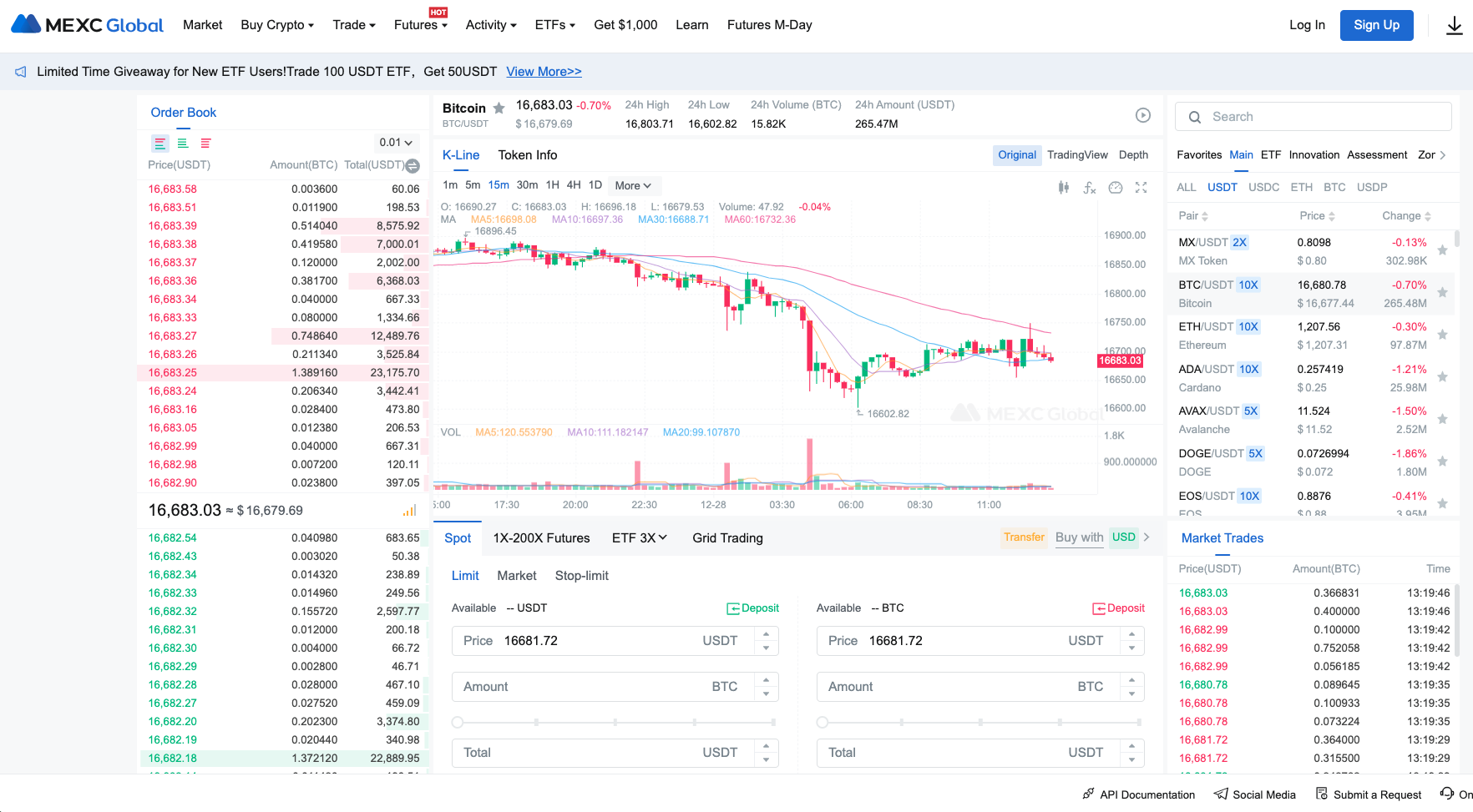
0% maker fees and 1,735 coins, the largest listing count here. Offshore, unregistered in Australia, and with no way to withdraw AUD to your bank.
- 0% maker fees on spot, 0.05% for takers
- 1,735 coins across 2,248 trading pairs
- Strong liquidity on major pairs
- Free trading bots and copy trading
- No AUD withdrawals to an Australian bank
- Not AUSTRAC-registered, no ASIC licence
- Australia is excluded from its top leverage tiers
- Small-cap listings can be thinly traded
MEXC has the lowest published fees of any exchange on this page: spot trading is free for makers and 0.05% for takers, and futures are 0% for makers and 0.02% for takers. It also lists more coins than anyone else here, 1,735 of them, which is why it is a common second account for people hunting small caps they cannot find on an Australian platform.
The trade-offs are significant. You cannot move Australian dollars in and out through your bank: you can buy with a card through a third-party processor, but you cannot withdraw Australian dollars to your bank, so cashing out means sending crypto to an Australian exchange first. MEXC is not on the AUSTRAC register and holds no ASIC licence.
One correction worth making, because a lot of articles get it wrong: MEXC's headline leverage of up to 500x is not available in Australia. MEXC's own announcement lists Australia among the excluded territories for its highest leverage tiers. Whatever leverage remains available to you is still far beyond ASIC's 2:1 retail limit, on a platform with no Australian licence and no AFCA recourse.
Binance – Deep liquidity, and AUD is back
USD welcome offers
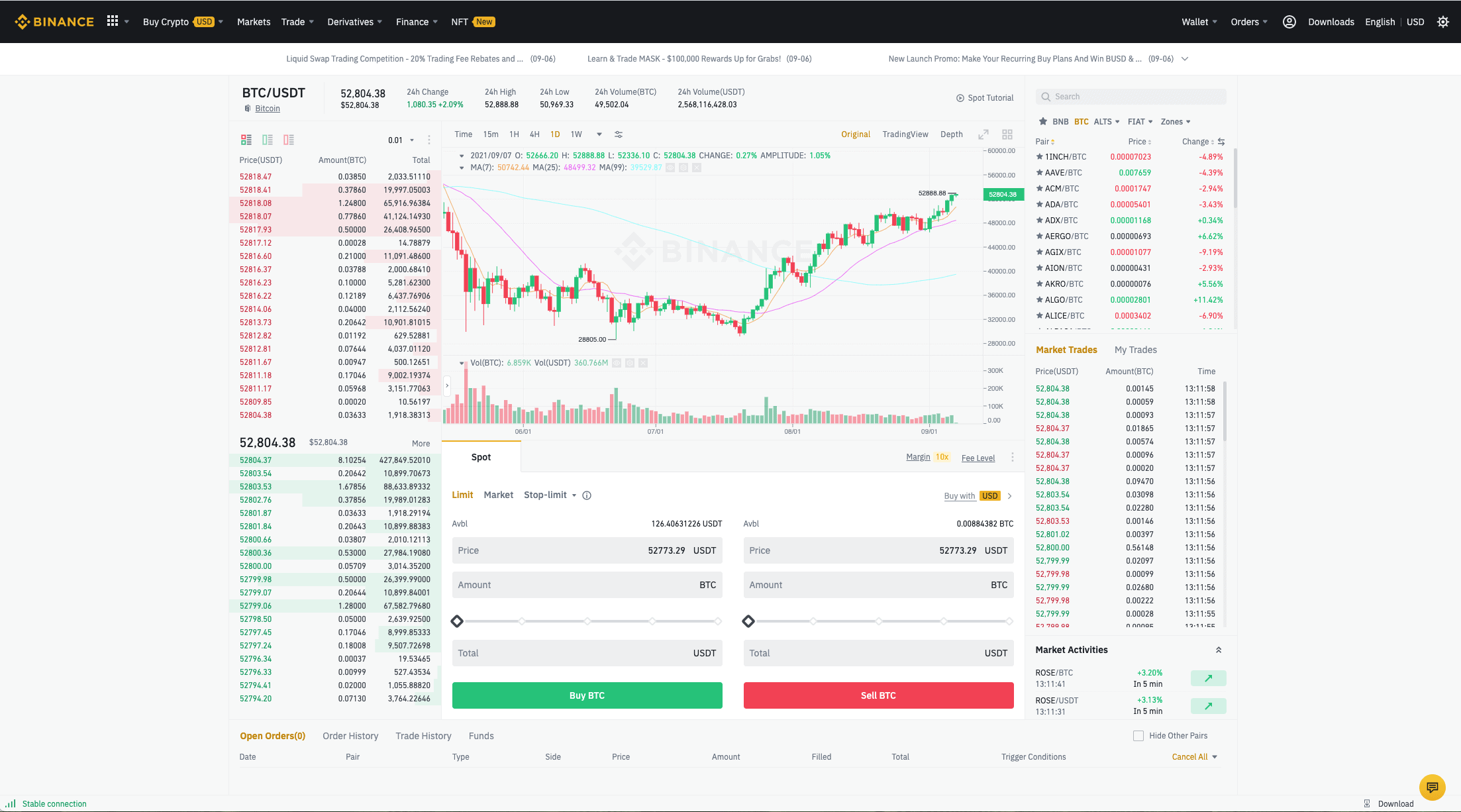
The world's deepest liquidity at 0.1% spot fees, and AUD deposits returned in January 2026. But its Australian derivatives licence was cancelled in 2023 and a $10m penalty followed in 2026.
- 0.1% spot fees, 25% off if you pay in BNB
- Deepest liquidity of any exchange
- AUD deposits and withdrawals via PayID, restored January 2026
- 449 coins, plus bots, P2P and Earn products
- No futures or derivatives for Australian users
- ASIC cancelled its Australian derivatives licence in 2023
- Fined A$10m by the Federal Court in March 2026
- Steep learning curve for beginners
Binance remains the largest exchange in the world by volume, and that liquidity is the reason to use it: on major pairs you will get filled at the price you expect. Spot fees are 0.1%, dropping 25% if you hold BNB and pay fees with it. There are 449 coins, plus trading bots, an NFT marketplace and P2P trading.
The Australian picture has changed twice, and most articles are out of date on both. AUD deposits and withdrawals, suspended for two and a half years, were restored in January 2026 through PayID and bank transfer. That is genuinely good news. On the other hand, Binance's Australian derivatives arm had its AFS licence cancelled in April 2023, and in March 2026 the Federal Court ordered it to pay a $10 million penalty for wrongly classifying more than 85% of its Australian clients as wholesale investors, which stripped those retail clients of protections they were entitled to. Futures and derivatives are not available to Australian users at all. Spot margin is.
Binance is a powerful platform and it is not the easiest place to start. If you have never used an order book, begin somewhere simpler.
KuCoin – Wide altcoin range, now with AUD
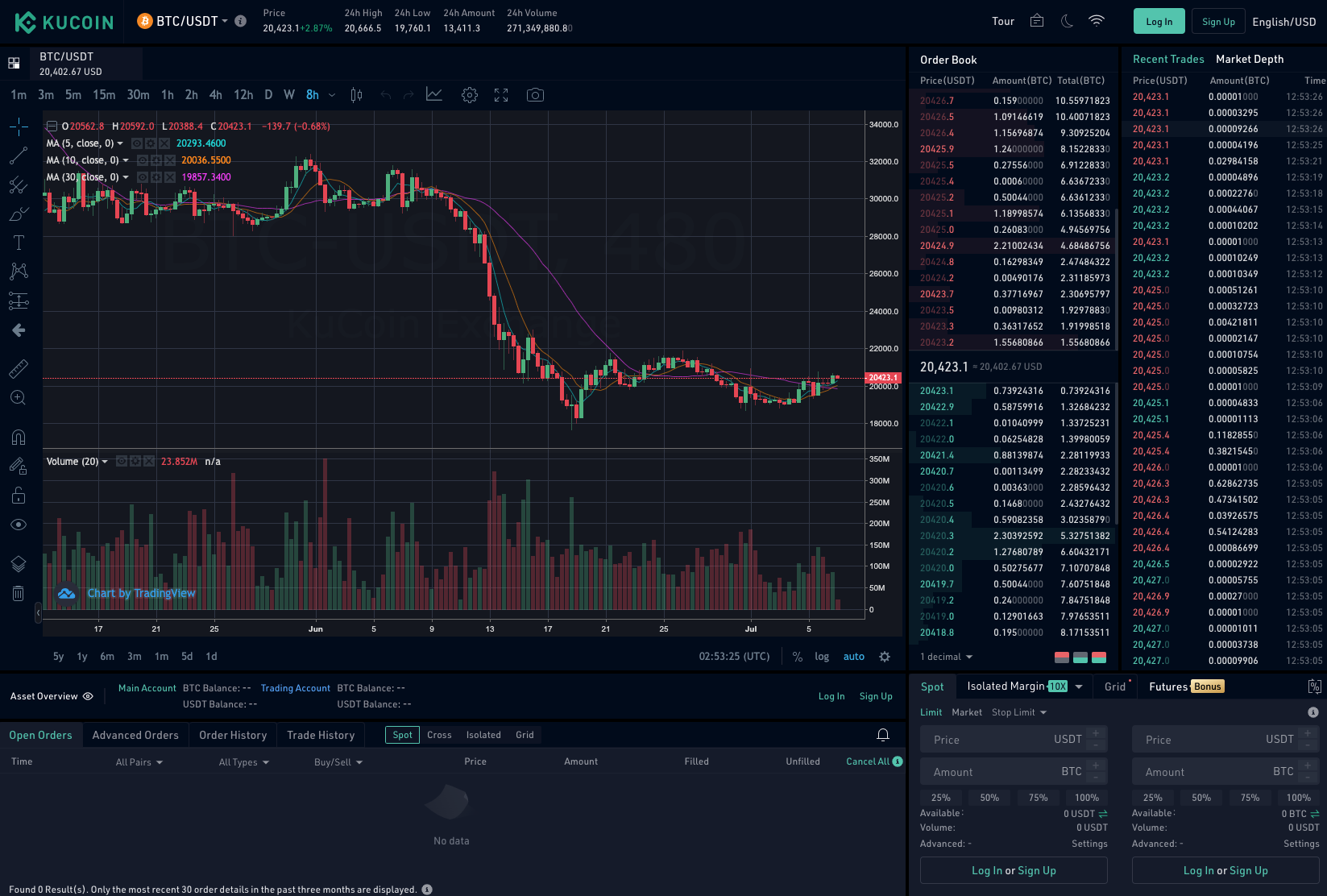
876 coins at 0.1% fees, and it has quietly become a serious Australian option: AUSTRAC-registered in November 2025, with native AUD via PayID and a Sydney office.
- 876 coins, second only to MEXC here
- 0.1% spot fees, 0.08% if you pay in KCS
- AUSTRAC-registered, with free AUD via PayID and Osko
- Free trading bots built into the platform
- Pleaded guilty to US charges and paid roughly US$297m in 2025
- No ASIC licence
- Customer support has a mixed reputation
- Futures availability for Australians is unclear
KuCoin is best known for its altcoin range, 876 coins at the last count, and for the free trading bots built into the platform: spot grid, futures grid, smart rebalance, dollar-cost averaging and infinity grid. Most platforms charge for that. Spot fees are 0.1%, or 0.08% if you pay them in KCS.
Its Australian position has improved sharply, and its American one has collapsed. KuCoin secured AUSTRAC registration in November 2025, opened a Sydney office, and now supports native AUD deposits and withdrawals through PayID and Osko, free of platform fees. Any review telling you KuCoin has no Australian fiat support is out of date. In the other direction, KuCoin pleaded guilty to operating an unlicensed money transmitting business in the United States, paid roughly US$297 million, and exited that market permanently. That is a real mark against its compliance record, and it is worth weighing even though it does not affect Australian users directly.
KuCoin also offers crypto lending, borrowing and staking. Futures were withdrawn from Australian users in 2024 and KuCoin says they are returning through a licensed local partner, but we could not confirm they are live, so do not count on them.
eToro Australia – The only ASIC-licensed platform here
ASIC-licensed
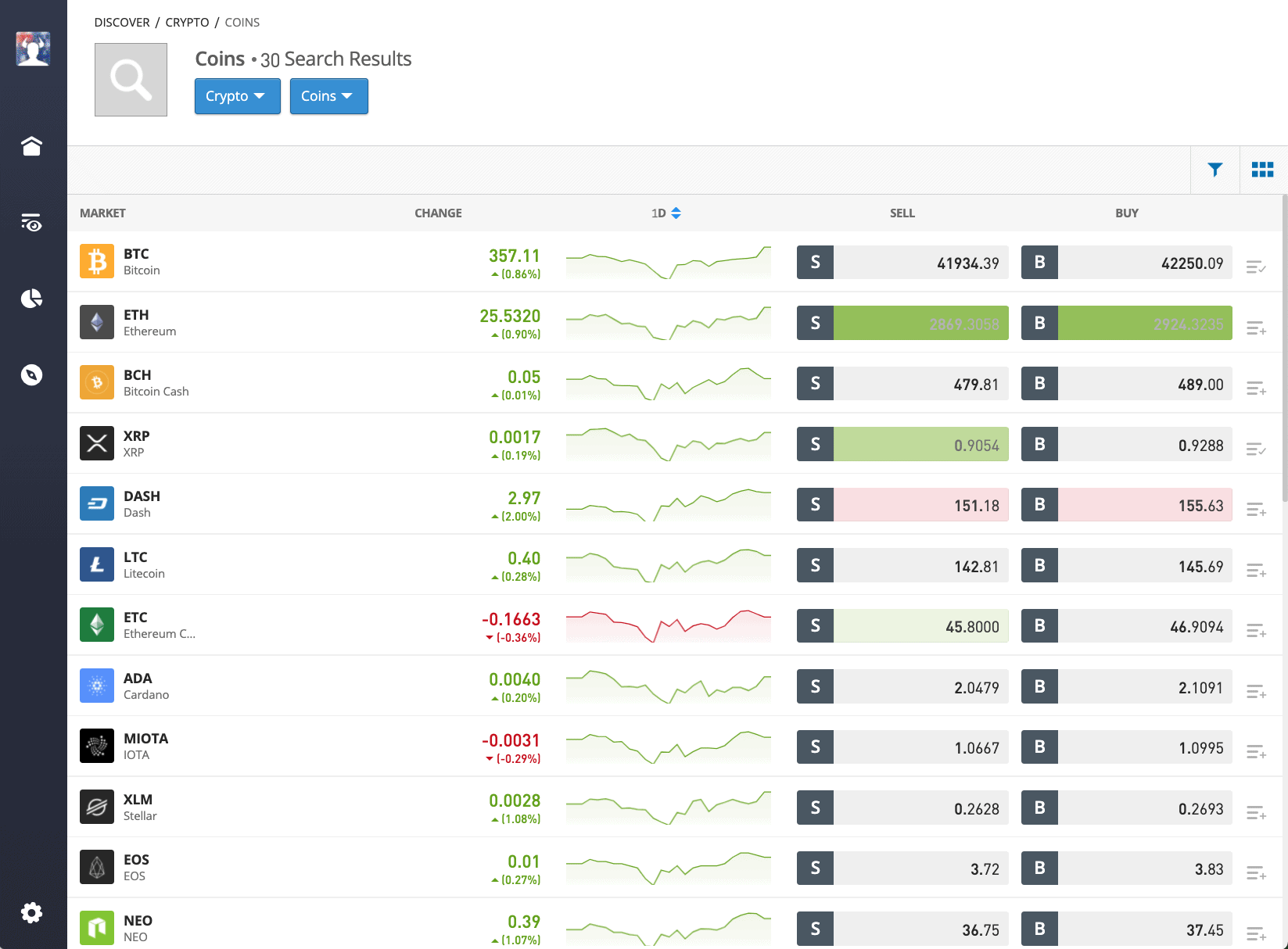
The only platform on this page that is both ASIC-licensed and AUSTRAC-registered. You pay for that protection with a 1% fee and a narrow 100-coin range.
- ASIC-licensed (AFSL 491139) and AUSTRAC-registered
- Crypto, shares, commodities and forex in one account
- Copy Trading: mirror experienced investors automatically
- Free AUD deposits and withdrawals, and a demo account
- 1% fee on every buy and sell
- Currency conversion fee of up to about 3%
- Only 100 coins
- 2% fee to move crypto off the platform
eToro is the outlier on this page, and it deserves more attention than its ranking suggests. eToro AUS Capital Limited holds an Australian financial services licence (AFSL 491139) and is AUSTRAC-registered. No other platform here does both. If the regulatory gap on the offshore exchanges bothers you, this is the answer to it.
It is also a social trading network rather than a pure exchange. You can follow other investors, see what they hold, and automatically copy their trades. Alongside crypto you can hold shares, commodities and forex in the same account, and there is a demo account with US$100,000 of virtual money.
The cost is real: 1% on every buy and every sell, a currency conversion fee of up to about 3% because the platform operates in USD, and 2% to move crypto off the platform. Its 100-coin range is the narrowest here apart from CoinJar. You are buying regulatory protection and a multi-asset account, and paying for both.
CoinJar – Spend your crypto like cash
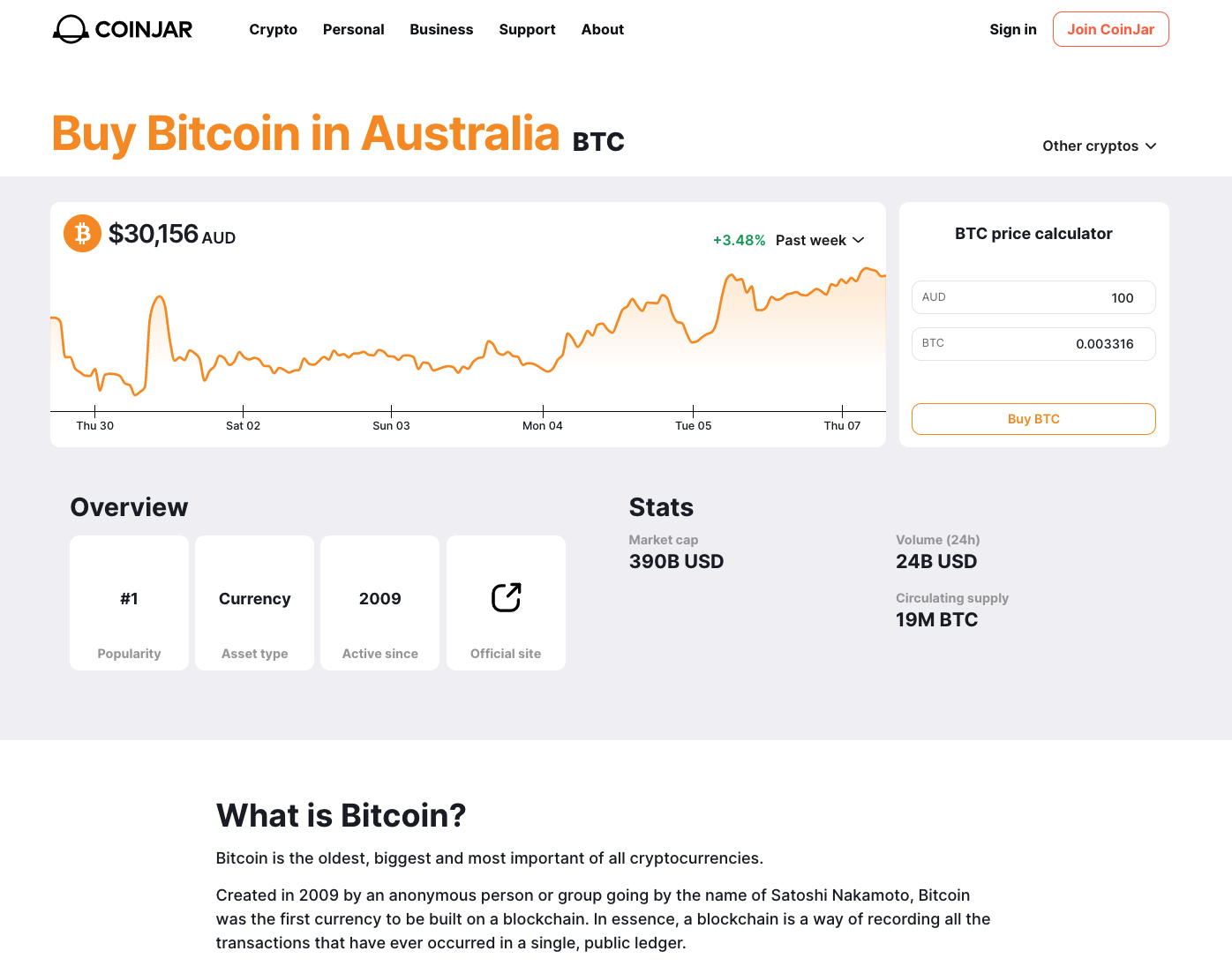
Melbourne-founded, running since 2013 with no breach on the record, and the only platform here that publishes a cold storage figure. The coin range is the narrowest on the page.
- CoinJar Card spends crypto anywhere Mastercard is accepted
- CoinJar Exchange fees start at 0.1% and fall to 0.06%
- More than 90% of assets in cold, multi-sig or MPC storage
- Free AUD deposits and withdrawals
- Only 60+ coins, the narrowest range here
- In-app buying costs 1%, and 2% by card
- No staking, margin or futures
- No sign-up bonus
CoinJar was founded in Melbourne in 2013, is still led by its co-founders, and has never suffered a publicly reported breach. It also publishes more about its custody than anyone else here: more than 90% of assets, including customer assets, held in cold storage, multi-signature or MPC wallets, with custody through BitGo and Fireblocks.
The signature feature is the CoinJar Card, a prepaid Mastercard that spends your crypto anywhere Mastercard is accepted, in store or online, with no monthly fee and rewards points on spending. It works with Google Pay and Apple Pay.
Use the Exchange, not the app, to buy. Buying in the CoinJar app costs 1%, or 2% by card. The same trade on CoinJar Exchange costs 0.1% or less. As with CoinSpot, the convenient button is the expensive one. The coin range, at 60-odd, is the narrowest on this page, so check your coin is listed before you commit.
Independent Reserve – Built for larger balances and SMSFs
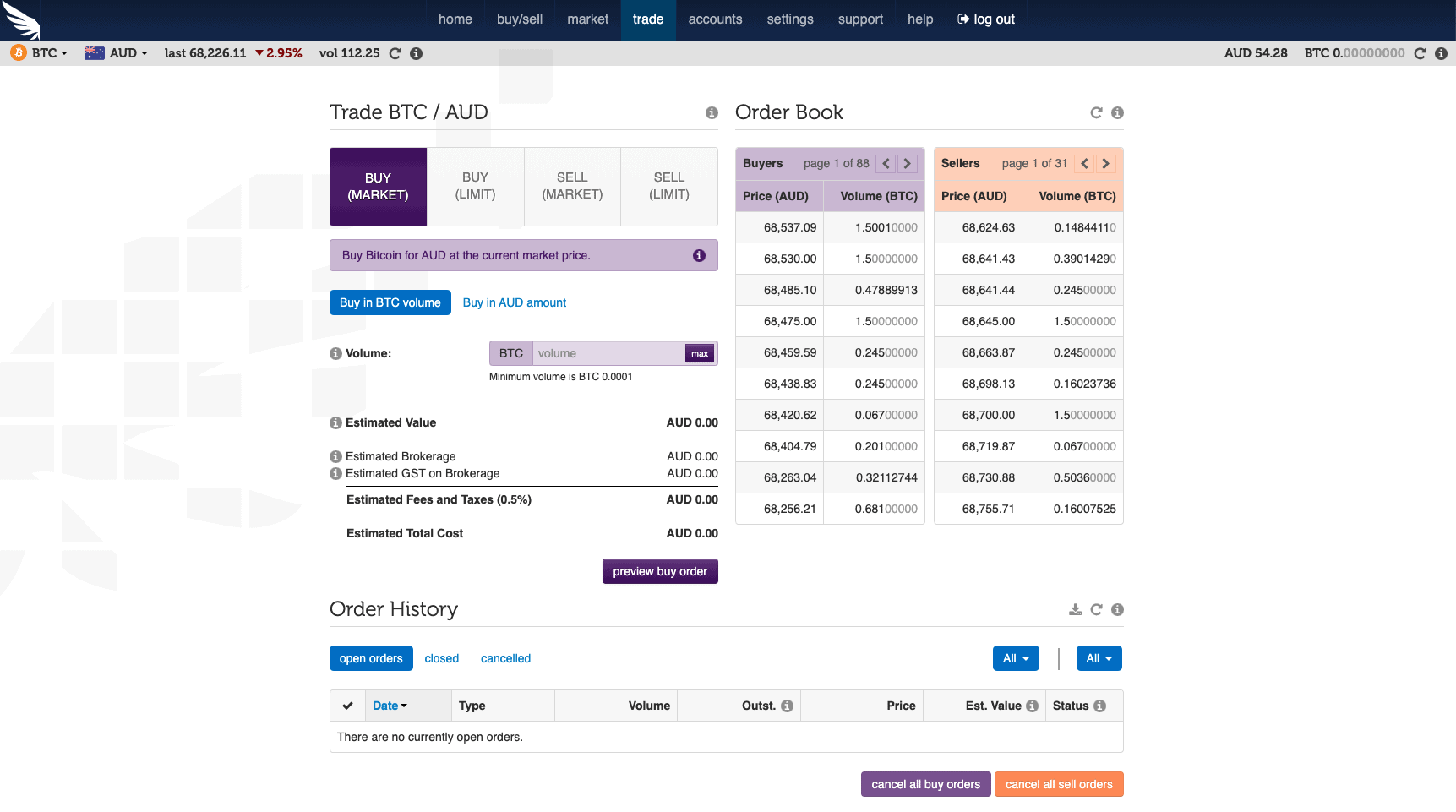
The professional option: fees fall to 0.02% at volume, there is a real OTC desk and SMSF support, and no breach in its history. Now owned by the UK-listed IG Group.
- Fees fall from 0.5% to as low as 0.02% at volume
- OTC desk and SMSF accounts
- ISO 27001 certified, insured qualified custodian, annual external audits
- Never been hacked
- Only 40-odd coins, no altcoins or meme coins
- Dated interface
- 0.5% starting fee is high for small trades
- No longer Australian-owned
Independent Reserve is built for people moving serious money. It was among the first two exchanges to register with AUSTRAC in 2018, it is ISO 27001 certified, it commissions annual external audits of its financial statements, and it has never lost customer funds. It also holds a Major Payment Institution licence from the Monetary Authority of Singapore, which is a meaningful second regulator.
Fees start at 0.5%, which is expensive for a small buy, but fall steeply with volume, reaching 0.02% for the largest traders. There is a proper OTC desk for large orders, SMSF accounts are supported, and it produces a KPMG-backed tax report that makes end-of-year reporting far less painful.
Two things to know. Independent Reserve says the vast majority of client assets sit with an insured, enterprise-grade qualified custodian, but it does not publish the insurer, the amount, or the custodian's name, so treat any specific dollar figure you see elsewhere with suspicion. And it is no longer an Australian-owned business: the UK-listed IG Group completed its acquisition in January 2026.
The coin range, at around 40, is small. If you want altcoins, look elsewhere.
Bitcoin.com.au – The simplest way to start
Trade A$500, get A$50 BTC
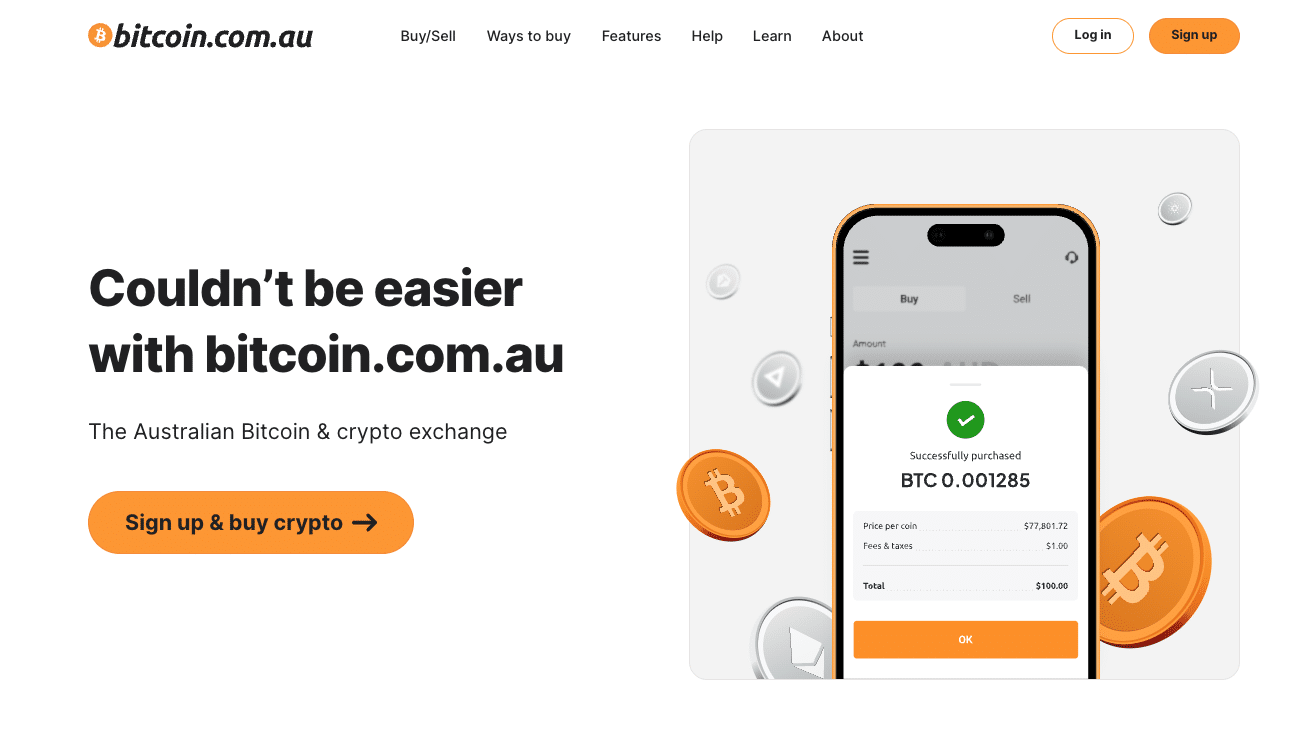
The easiest on-ramp on this page, with the best sign-up offer: trade A$500 and get A$50 of Bitcoin. Note it is a business name of Independent Reserve, number 10 above, not a separate company.
- Trade A$500 and receive A$50 of Bitcoin, to 31 December 2026
- Start with as little as $1
- Free AUD deposits by bank transfer, PayID, card or PayPal
- Same security and custody as Independent Reserve
- Flat 1% brokerage, the most expensive fee here
- Only 40-odd coins
- No advanced trading features
- Not an independent alternative to Independent Reserve
Read this first. Bitcoin.com.au is a registered business name of Independent Reserve, the exchange at number 10. Same company, same AUSTRAC registration, same custody, same owner. We have listed it separately because it is a genuinely different product with a different fee model and a different sign-up offer, but it is not a second, independent platform, and you should not treat it as diversification.
With that said, it is the friendliest starting point on this page. The buying process is stripped back to almost nothing, you can start with as little as $1, deposits by bank transfer, PayID, card and PayPal are free, and there are no charts or order books to navigate. There is a Learn section for working out what you are actually buying.
It also currently has the best offer of any exchange here: place trades totalling A$500 and receive A$50 of Bitcoin, running to 31 December 2026 for new Australian customers who verify their ID.
The cost of all that simplicity is a flat 1% brokerage on every trade, ten times what a market order costs on CoinSpot, and a spread on top. It is a fine place to buy your first $100 of Bitcoin. It is an expensive place to keep buying.
How to choose the right crypto exchange in Australia
There are a lot of options, and picking the wrong one costs you money, or worse, creates a security problem. Here is what actually matters, in the order it matters.
1 Work out your total cost, not the headline fee
The advertised trading fee is rarely what you pay. Three other costs usually dwarf it:
- The spread, which is the gap between the buy and sell price. On Swyftx, the published spread on Bitcoin is around 1.1%, well above its 0.6% fee, and volume discounts do not reduce it. Digital Surge and Bitcoin.com.au also charge one without publishing the size.
- The instant-buy premium. CoinSpot charges 1% for instant buy and 0.1% for a market order. CoinJar charges 1% in the app and 0.1% or less on CoinJar Exchange. Same coin, same platform, ten times the cost, purely for using the simpler screen.
- Deposit and withdrawal fees. PayID and bank transfer are free almost everywhere on this page. Cards cost 1% to 3.5%. eToro's currency conversion runs up to about 3%.
If you are buying a few hundred dollars at a time, these costs matter far more than the difference between a 0.1% and a 0.6% trading fee.
2 Check how you get your money out, before you put it in
The question that catches people out is not how to get money in. It is how to get it out. CoinSpot, Swyftx, Digital Surge, CoinJar, Independent Reserve, Bitcoin.com.au, Binance and KuCoin all let you withdraw Australian dollars straight to your bank account. Bybit and MEXC do not. On those two, cashing out means transferring your crypto to an Australian exchange and selling it there, which costs time and fees.
3 Understand what AUSTRAC registration does and does not mean
AUSTRAC registration is an anti-money-laundering requirement. A registered platform must verify your identity, keep records and report suspicious transactions. That is all it means.
It does not license the platform to provide financial services, does not check how it holds your money, does not audit its solvency, and is not a guarantee against loss. An ASIC financial services licence is a different and higher bar, and on this page only eToro holds one for its crypto offering. AUSTRAC now publishes a public register you can search, so you can verify any platform's claim yourself rather than taking a review site's word for it.
4 Look at security disclosures, not security marketing
Every exchange says it takes security seriously. What separates them is what they will put in writing:
- Certification. CoinSpot, Swyftx and Independent Reserve hold ISO 27001. Digital Surge and CoinJar do not.
- Custody. CoinJar is the only platform here that publishes a cold storage percentage, at more than 90%. Everyone else says "the vast majority" and leaves it there.
- Audits. CoinSpot has published external financial audits confirming 1:1 customer holdings for FY21 to FY23. Independent Reserve commissions annual audits. Nobody on this page publishes a genuine cryptographic proof of reserves.
- Track record. CoinSpot is the only exchange here with a confirmed incident, a roughly US$2.4m hot wallet exploit in November 2023. Digital Surge went into administration in 2022 after FTX exposure and repaid customers through a rescue deal.
And for anything you are not actively trading, the safest option is not an exchange at all. Move it to a wallet you control.
5 Match the platform to what you actually do
Buy and hold a few major coins? Almost any Australian platform here works, so pick on cost and how easily you can cash out. Trading weekly? The fee difference compounds and Bybit, Binance or MEXC will save you real money. Hunting small caps? MEXC and KuCoin list thousands of coins the Australian platforms never will. Running an SMSF or moving six figures? Independent Reserve. Want to spend crypto day to day? CoinJar's card.
Liquidity matters here too. Binance and Bybit have deep order books on major pairs, meaning your order fills fast with minimal slippage. That depth does not extend to every obscure altcoin, so check the order book before you place a large order in a thin market.
Crypto regulation and tax in Australia
Two things changed in 2026 that most crypto guides have not caught up with.
The rules are tightening
ASIC's updated guidance (INFO 225, October 2025) confirms that many digital assets are already financial products under existing Australian law, which means the platforms offering them need an ASIC licence. Firms have until 30 September 2026 to lodge a licence application or notify ASIC they are leaving. Australia has also passed the Corporations Amendment (Digital Assets Framework) Act 2026, which creates a formal licensing regime for digital asset platforms commencing 9 April 2027.
Separately, AUSTRAC's regime was broadened from 31 March 2026: the old "digital currency exchange" category has been replaced by a wider virtual asset service provider regime that also covers crypto-to-crypto exchange and custody, and there is now a public register you can search.
The practical effect: the offshore platforms on this page are operating in a window that is closing. Expect some to seek an Australian licence, and expect others to restrict Australian users.
There is no government guarantee on crypto
The $250,000 Financial Claims Scheme covers deposits at Australian banks. It does not cover crypto, and it does not cover money sitting in an exchange account. If an exchange is hacked, becomes insolvent or freezes withdrawals, your recovery depends on that platform's own arrangements and on insolvency law, not on any government protection. Digital Surge's 2022 administration is the local worked example: customers were eventually made largely whole through a creditors' deal, but only after a long wait and not in full for everyone.
How the ATO taxes crypto
The ATO does not treat crypto as money. For most people it is a CGT asset, and the tax consequences are more far-reaching than new investors expect:
- A CGT event happens when you sell, gift, or spend crypto, and when you swap one crypto for another. That last one surprises people: trading Bitcoin for Ethereum is a disposal, even though no Australian dollars moved, and you need the AUD value at the time.
- If you hold an asset for at least 12 months, you may be entitled to the 50% CGT discount on the gain.
- Staking rewards and most airdrops are ordinary income at their AUD value when you receive them, and are taxed again as a CGT event when you later sell.
- The ATO runs a crypto data-matching program that collects information directly from exchanges and matches it against tax returns. Assume it can see your trades.
- Keep records of every transaction, including dates, AUD values and what the transaction was for, for five years.
This is general information, not tax advice, and if you trade as a business the treatment is different. Independent Reserve's KPMG-backed tax report and dedicated crypto tax software both make this considerably less painful than a spreadsheet.
Research before you commit
Identifying your specific needs and the features you require will streamline the process of finding an exchange that aligns with your requirements. Below are some key aspects to consider, each linked to more detailed information:
- Lowest fees and spreads
- Best customer support
- Best demo accounts
- Best for margin trading
- Best for day trading
- Best for copy trading
- Best trading bots
- Best crypto debit cards
- Best seed phrase storage
- Zero-fee trading platforms
Final thoughts
There is no one-size-fits-all crypto exchange. The best platform for you depends on your trading style, experience level, and what features matter most. What works for a beginner who just wants to buy and hold Bitcoin is rarely the right answer for a day trader who needs low fees and fast execution.
If I had to compress this page into one paragraph: use an AUSTRAC-registered Australian exchange for anything you are buying and holding in Australian dollars, use market orders rather than instant buy, and only reach for an offshore platform if you are trading actively enough that the fee difference outweighs giving up your Australian consumer protections. Whatever you are not actively trading belongs in a wallet you control, not on an exchange.
To help make your decision easier, I have written detailed reviews of each of these platforms. I break down features, advantages and disadvantages, fees, and key differences so you can work out which exchange fits your needs. Whether you are just starting out or you are an experienced trader, these insights should help you make an informed choice.
Frequently asked questions
What is the best crypto exchange in Australia?
It depends on what you are optimising for. Bybit is the best venue for active trading, with 0.1% spot fees and deep liquidity, but you cannot move Australian dollars in or out through your bank, and it is not AUSTRAC-registered. For buying and holding in Australian dollars, CoinSpot is the strongest all-round Australian option: 480+ coins, free AUD deposits and withdrawals, AUSTRAC-registered since 2018, and 0.1% fees if you use market orders instead of instant buy.
Which Australian crypto exchange has the lowest fees?
On headline fees, MEXC is the cheapest at 0% for makers and 0.05% for takers, but it is offshore with no AUD withdrawals. Among Australian platforms, CoinSpot's 0.1% market order and Digital Surge's volume-based fees from 0.5% down to 0.1% are the lowest, and Independent Reserve reaches 0.02% at high volume.
Be careful comparing headline fees. The spread is often the bigger cost, and using an exchange's instant-buy button instead of a market order typically costs ten times as much.
Are crypto exchanges regulated in Australia?
Partly, and less than most people assume. Exchanges must register with AUSTRAC, but that is an anti-money-laundering requirement only: it does not license the platform to provide financial services, does not vet how it holds your funds, and is not a guarantee against loss.
This is changing. ASIC's INFO 225 guidance confirms many digital assets are already financial products requiring an ASIC licence, with a 30 September 2026 deadline for platforms to apply, and the Corporations Amendment (Digital Assets Framework) Act 2026 introduces a full licensing regime from 9 April 2027. Of the platforms on this page, only eToro currently holds an ASIC financial services licence.
Which exchanges let me deposit and withdraw AUD?
CoinSpot, Swyftx, Digital Surge, CoinJar, Independent Reserve, Bitcoin.com.au, eToro, Binance (restored in January 2026) and KuCoin (added in 2025) all support AUD deposits and withdrawals to an Australian bank account, mostly free via PayID or bank transfer.
Bybit and MEXC do not. You can buy crypto on them with a card through a third-party on-ramp, but to cash out you must send your crypto to an Australian exchange and sell it there.
Do I pay tax on cryptocurrency in Australia?
Yes. The ATO treats crypto as a CGT asset for most investors. You trigger a capital gains event when you sell, gift or spend crypto, and also when you swap one crypto for another, even though no Australian dollars change hands. Holding for at least 12 months may entitle you to the 50% CGT discount. Staking rewards and most airdrops are ordinary income at their AUD value when received.
The ATO collects transaction data directly from exchanges through a data-matching program, so assume your trades are visible. Keep records for five years. This is general information, not tax advice.
Is my money safe on a crypto exchange?
There is no government guarantee. The $250,000 Financial Claims Scheme covers bank deposits, not crypto and not exchange balances. If a platform is hacked or fails, recovery depends on its own arrangements. Digital Surge's 2022 administration is the Australian example: customers were largely repaid, but slowly and through a creditors' deal.
Look for ISO 27001 certification, published custody arrangements, external audits and mandatory two-factor authentication. And for anything you are not actively trading, move it off the exchange into a wallet you control.
Can I use 100x leverage on crypto in Australia?
Not from a licensed Australian provider. ASIC caps leverage on crypto derivatives at 2:1 for retail clients. The 100x and higher leverage advertised by Bybit, MEXC and KuCoin is available only because those platforms operate offshore without an Australian licence, and MEXC's own terms exclude Australia from its highest leverage tiers.
Using an offshore platform is not an offence for you personally, but you give up access to AFCA, client-money protections and negative balance protection, and leveraged positions can lose more than you deposited.
Marketplacefairness.org provides all its content for informational purposes only, and this should not be taken as financial advice to buy, trade or sell cryptocurrency or use any specific exchange. Please do not use this website as investment advice, financial advice or legal advice, and each individual’s needs may vary from that of the author. This post includes affiliate links with our partners who may compensate us.
Fees, coin counts, bonuses and regulatory status were verified against primary sources in July 2026 and change frequently. Always confirm current details directly with the exchange before you deposit.
To view our privacy policy read it here.